
Uncategorized
Cast Iron Table Bases: Classic Weight and Coastal Reality
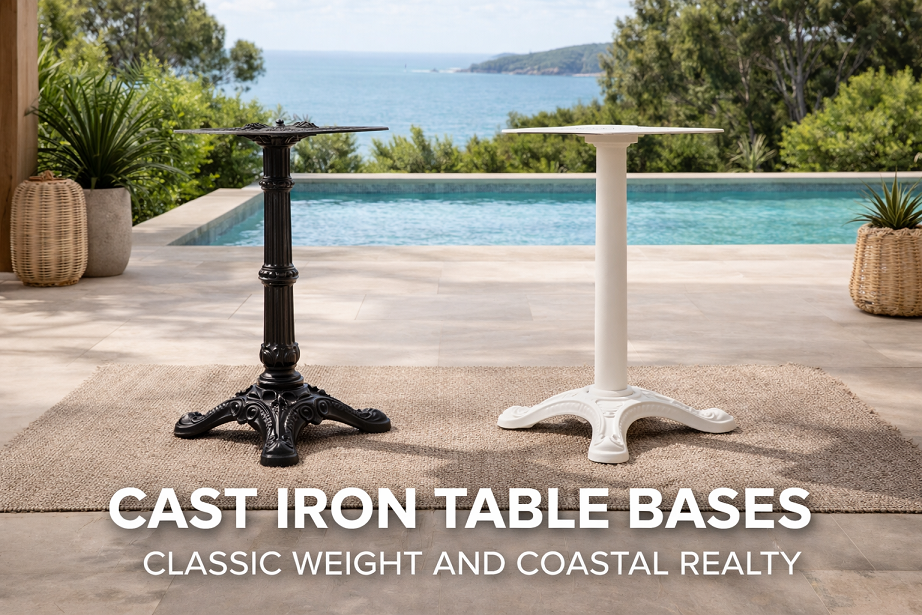
Cast iron is the traditional choice for an outdoor table base when you want something that feels solid, grounded, and permanent. It is dense and heavy, so once you place it on your deck, paving, or concrete, it tends to stay put. That weight is helpful in coastal areas where gusty winds can turn lighter furniture into a nuisance.
Visually, cast iron suits classic or luxury styled spaces. Think detailed feet, ornate columns, and a base that looks like it belongs under a stone or timber top. If you are fitting out a refined courtyard, a traditional veranda, or an upscale restaurant that leans into heritage styling, cast iron delivers that sense of presence many lighter bases cannot match.
How Cast Iron Behaves Near the Coast
The trade off for the weight and character is corrosion. Bare cast iron reacts quickly to salt and moisture. In coastal Australia, that means rust if the protective finish is not up to the job or if it is left damaged for too long.
Quality outdoor cast iron bases use powder coating or layered paint systems to create a barrier between the metal and the air. When that coating is intact, performance is surprisingly strong, even in salty zones. Problems start where feet scrape, chairs hit the base, or cleaners chip the finish. Those small breaks let salt and water reach the metal.
If you are in a high exposure area, such as a beachfront balcony or an uncovered alfresco, expect to:
- Inspect the base regularly for bubbles, chips, or faint orange staining
- Touch up any exposed spots before they spread
- Rinse off salt spray and grit as part of your outdoor cleaning routine
Who Cast Iron Table Bases Suit Best
Cast iron suits homeowners and venues who want a traditional or luxe aesthetic and are happy to put in a bit of care. It works well in:
- Sheltered patios, courtyards, and verandas with some protection from direct salt spray
- Upscale dining areas that value classic styling and a substantial feel under larger table tops
- Spaces where furniture layout rarely changes, because cast iron is not fun to drag around
If your priority is coastal character and a base that feels anchored, cast iron can be the right call. If you prefer a lighter, modern look with less hands on maintenance, you will likely lean toward stainless steel for your next outdoor table base or choose a full setting that matches, such as a coastal ready large outdoor dining set built for Australian conditions.
Stainless Steel Table Bases: Clean, Coastal and Low Fuss
If you want an outdoor table base that can sit near salty air without constant touch ups, stainless steel is usually the front runner. It suits coastal homes and commercial venues that need clean lines, low maintenance, and reliable corrosion resistance in Australia’s harsher seaside spots.
Why Stainless Steel Works So Well Near the Coast
Stainless steel contains chromium, which forms a thin, invisible layer over the surface. This passive layer helps resist rust and staining, especially when you choose a grade suited to marine and coastal conditions. For exposed decks, rooftops, and beachfront venues, that choice of grade matters just as much as the design of the base.
For coastal use, look for wording such as marine suitable stainless steel and check that the base is marketed specifically for outdoor or hospitality environments near salt and humidity. That tells you it is designed to cope with corrosive air, regular cleaning, and daily use, rather than just indoor decorative use.
Compared with cast iron, stainless steel bases are typically lighter, which makes them easier to move when you want to reconfigure a layout or store pieces. Stability then comes from smart base design, such as a broad footplate and correct sizing for your chosen table top.
Everyday Maintenance and Appearance
Stainless steel fits modern, minimal, and coastal inspired spaces. It pairs well with slim table tops, clean lined dining sets, and modular lounges such as contemporary pieces you will find in ranges similar to the Siesta Mykonos lounge sets.
Care is simple. A rinse to remove salt film, a soft cloth, and a mild detergent keep the surface looking sharp. For eco conscious buyers, it pairs well with a buy once mindset, since stainless steel is highly recyclable and durable when looked after.
Why Hospitality and Commercial Spaces Favour Stainless Steel
For coastal restaurants and cafes choosing a table base for coastal restaurants, stainless steel often edges ahead. It supports:
- Hygiene, with a non porous, easy to disinfect surface that suits food service and high turnover seating
- Longevity, with strong corrosion resistance that handles frequent cleaning and salt exposure
- Consistent presentation, which keeps outdoor dining areas looking sharp across busy seasons
If you want a modern coastal look with less hands on maintenance, stainless is usually the safer long term choice for your stainless vs cast iron table base decision, whether you are setting up a family deck or fitting out multiple tables in a venue. Pair it with a durable, weather ready dining setting, such as the flexible layouts in guides like 10 seater outdoor dining sets, and you end up with an outdoor area that works hard without looking tired.
Maintenance Tips For Coastal Cast Iron And Stainless Steel Table Bases
If you live by the coast in Australia, maintenance is not optional, it is the price of enjoying that view. The good news is, a simple routine keeps both cast iron and stainless steel table bases looking sharp for years.
Simple Cleaning Routine For Coastal Homes And Venues
For both materials, make this your baseline care, especially if you can taste salt in the air at your place or venue.
- Rinse bases with fresh water on a regular cycle to remove salt film and sand
- Use a soft cloth or sponge with mild, pH neutral detergent
- Avoid abrasive scourers, harsh chemicals, and bleach based cleaners
- Dry off around joints, fixings, and base plates to avoid water sitting there
If you are running a busy outdoor dining space, work this into your normal pack down routine so it becomes automatic, just like wiping the table tops.
Extra Care For Cast Iron Table Bases
Cast iron needs more protection in salty air, because the core metal is keen to rust once the coating is breached.
- Inspect monthly for chips, bubbles, or brown staining near feet and corners
- Touch up fast by lightly sanding any rust, cleaning thoroughly, then recoating with a compatible outdoor paint or touch up kit suggested by your supplier
- Protect contact points by using glides or pads where the base meets pavers or decking to reduce chipping
- Recoat periodically if the overall finish looks tired, especially in high exposure, such as balcony edges or open courtyards
For families or venues that want low fuss furniture, it can help to pair cast iron bases with durable, low maintenance dining sets so all your effort is focused on the metal. For ideas, you can look at resilient settings such as the Siesta 7 piece patio dining set, which is built for Australian weather.
Extra Care For Stainless Steel Table Bases
Stainless steel is more forgiving near the ocean, but it still deserves some attention if you want that clean, modern look to last.
- Rinse away salt and pollution on a consistent schedule, especially within sight of the water
- Use a non abrasive stainless cleaner if you notice light tea staining or streaks
- Always wipe in the direction of the grain on brushed finishes to avoid swirl marks
- Avoid steel wool or carbon steel brushes, which can leave particles that trigger surface rust
Protection During Harsh Weather
Coastal storms, summer heat, and long wet spells can all shorten the life of your bases if you ignore them.
- Use covers during long off seasons, especially in holiday homes or venues that close for part of the year
- Shift furniture inboard during extreme weather, away from direct salt spray zones and pooling water
- Check fixings after heavy winds and storms, tighten loose bolts and clear trapped debris
If you are setting up a space from scratch and want your bases and seating to age well together, it is worth choosing outdoor furniture that is already designed for harsh weather. Guides like how to choose durable outdoor furniture for Australian weather can help you match your table bases with long lasting chairs and lounges.
Short version. Rinse regularly, treat small issues early, and give your bases a bit of shelter when the coast really turns it on. That is how you keep both cast iron and stainless steel earning their keep instead of heading to the scrap pile.
Recommended Outdoorly Options To Pair With Your Table Base
You have narrowed down stainless vs cast iron for your outdoor table base. The next smart move is to match that base with furniture that is just as coastal ready. There is no point in choosing a durable base, then surrounding it with chairs and lounges that fade, crack, or rust before it does.
Outdoorly focuses on pieces that handle Australian sun, salt, and family traffic, so you can build a setting that works as a whole, not as a mix of random bits.
For Coastal Homes And Growing Families
If your place is the regular spot for weekend barbecues or big family dinners, look for settings that give you:
- UV safe, weather resistant frames that can sit near the coast without constant babying
- Easy clean surfaces, so spills, sunscreen, and sea spray wash off fast
- Flexible seating layouts that work with different base styles and table sizes
Ranges like the Siesta Vegas 10 seater dining sets or other large Siesta dining settings pair well with a solid central table base, especially if you want room for guests without crowding the balcony or patio.
For Coastal Restaurants, Cafes And Venues
If you are choosing a table base for coastal restaurants, you need furniture that respects two things, high traffic and fast cleaning. When you combine a corrosion resistant stainless base with commercial grade seating you get:
- Stackable, lightweight chairs that move quickly during pack down
- Non porous materials that handle regular disinfecting and salt exposure
- Consistent presentation across outdoor zones, from bar areas to dining sections
Outdoorly’s commercial ready pieces, such as the Siesta Sky bar sets and larger resin dining settings, are designed to work alongside stainless bases in busy coastal venues.
For Eco Conscious And Low Maintenance Buyers
If you care about sustainability and you are tired of replacing cheap settings, look for combinations that support a long service life, not quick turnover.
- Match recyclable metals like stainless steel with UV stable resin or rattan look seating
- Choose neutral, timeless colours that sit comfortably with both cast iron and stainless bases
- Focus on products marketed for Australian weather rather than purely decorative pieces
Outdoorly’s wider range of UV safe dining sets and lounges, such as the modular Siesta lounges and resin rattan settings, are built to sit comfortably around either a classic cast iron base or a modern stainless option, so your entire outdoor area shares the same coastal ready mindset.
Frequently Asked Questions About Outdoor Table Bases In Coastal Areas
Which material is better for coastal restaurants, cast iron or stainless steel?
For a table base for coastal restaurants, stainless steel usually wins. It copes better with constant salt, frequent cleaning, and daily movement of tables. Cast iron can work in more sheltered zones if you stay on top of coating maintenance, but for open decks and sea facing dining, a quality stainless base is the safer long term choice.
How do cast iron and stainless steel compare on cost?
Cast iron is often more affordable at the start, especially for standard shapes. Stainless steel usually costs more upfront, because you are paying for the corrosion resistance and cleaner finish. Over time, the extra spend on stainless can balance out through lower maintenance and fewer repaints or replacements. Your best move is to weigh initial budget against how exposed your space is and how much time you want to spend maintaining the bases.
How does coastal weather affect each material?
Cast iron reacts faster to chips and scratches in salty, humid conditions. Once the coating is breached, rust can spread if you ignore it. Strong wind is less of a problem, because the weight keeps the table stable.
Stainless steel handles salt and moisture better, especially in marine suitable grades, but it still needs rinsing to avoid surface staining. Its lighter weight means you must match the base footprint and design to your table size so wind does not shift it around.
Which option is better for eco conscious buyers?
Both materials can suit an eco minded approach if you buy quality once and maintain it well. Stainless steel is highly recyclable and works well with a long service life mindset. Cast iron is also recyclable, but relies more on coatings, so you need to choose finishes and touch up products thoughtfully. The real sustainability gain comes from avoiding cheap, replace often furniture and pairing your base with durable outdoor pieces, such as long lasting dining sets similar to those in weather resistant outdoor furniture guides.
Is cast iron ever a good idea right on the beachfront?
It can be, but only if you are realistic. On a balcony or terrace within direct salt spray, cast iron needs regular rinsing, fast touch ups, and occasional recoats. If you want a classic, luxe look and are prepared to maintain it, cast iron earns its place. If you know you will not keep up with that, stainless steel is the more forgiving choice.
What should I prioritise for a busy family home near the coast?
Put low maintenance and stability at the top of the list. A stainless steel base with the right footprint, paired with a durable outdoor dining setting, gives you fewer headaches. If you host large gatherings, look at layouts similar to those in a 10 seater outdoor dining buyer guide so your base size, table top, and seating all work together in your coastal space.
