
Uncategorized
Top Weather-Resistant Outdoor Furniture for Australian Homes
Dec
Weather-resistant outdoor furniture is furniture that can live outside, in the real conditions you get across Australia, and still hold its shape, colour, comfort and structure over time. It is not just “outdoor rated” on a tag. It is built from materials, finishes and fabrics that can handle harsh UV, sudden downpours, salty air, humidity and big temperature swings without falling apart or looking tired after one season.
For Australian homes and commercial spaces, that difference really matters. If you have a family that lives outside most weekends, a balcony you use daily, or a venue that relies on outdoor seating, you cannot afford chairs that fade, crack or wobble after a short stretch of hot days and wet weeks. Good weather-resistant furniture protects your investment, keeps your space looking sharp and avoids the constant cycle of replacing broken or shabby pieces.
The challenge is our climate. Intense sun exposure can bleach timber, powder-coat and fabrics, and it can make cheaper plastics brittle. UV breaks down fibres, weakens structural joints and can turn once rich colours into a dull, patchy mess.
Then you have rain and humidity. In many regions, furniture needs to dry fast and resist swelling, warping, mould and rust. Any material that soaks up water or traps moisture will age quickly, grow mildew or start to rot. That is a problem for both comfort and hygiene, especially in high traffic hospitality areas.
Coastal conditions add another layer. Salt in the air accelerates corrosion on metals and can damage certain finishes. If you are near the coast, materials that look fine in a sheltered city courtyard might rust, pit or peel much sooner on your deck.
Temperature swings also matter. Hot days and cool nights cause some materials to expand and contract. If the furniture is not designed for that, you get hairline cracks, loose joints and wobbly tables.
When you choose weather-resistant outdoor furniture that is designed specifically for Australian conditions, you get a space that stays comfortable, safe and good looking for far longer. That is true whether you are fitting out a family patio, a pool area or a full commercial terrace, and it is exactly why thoughtful material choice is the foundation of any outdoor setup that lasts.
Key Factors To Consider When Choosing Outdoor Furniture Materials
Before you fall in love with a look, you need to know if the material can survive your specific corner of Australia. Here is what actually matters when you are choosing outdoor furniture that has to live outside full time.
1. UV resistance
Strong UV is brutal on timber, fabrics and plastics. Look for:
- UV stabilised materials that are designed not to go chalky or brittle
- Fade resistant fabrics for cushions, not indoor textiles in outdoor colours
- Quality finishes on timber and metal that protect colour and structure
If your space gets all day sun, UV performance should be your first filter, especially for hospitality and poolside areas that cop constant exposure.
2. Water and moisture resistance
Rain, humidity and coastal air all push moisture into weak points. You want materials that:
- Shed water fast and do not stay sponge wet
- Resist mould, mildew and rot
- Use rust resistant metals and fixings
For busy families and venues, quick drying furniture means you are not constantly dragging soggy cushions inside or wiping down every seat before use.
3. Durability in temperature swings
Hot days and cool nights can crack cheaper plastics and warp low quality timber. Check that frames and tabletops are designed to expand and contract without splitting, and avoid anything that already feels flimsy in the showroom. If it feels light and rattly now, it will not improve outside.
4. Maintenance load
Be honest about how much care you will give your setup. Some materials need regular oiling or sealing. Others just need a hose and a soft brush. For high traffic commercial spaces and low fuss home setups, prioritise low maintenance pieces that still look refined, or explore full settings that are designed for heavy use, such as the commercial quality options in the outdoor dining and lounge collections.
5. Aesthetic and comfort
Your outdoor area is an extension of your living space. Materials should match your architecture and landscaping, and still feel good to sit on in real heat. That means:
- Surfaces that do not scorch bare skin in the sun
- Supportive seats with proper ergonomics, not just flat slabs
- Colours and textures that suit how you entertain and relax
Luxury buyers and renovators usually want a cohesive look across dining, lounging and pool zones, so choose materials that can run through your whole layout.
6. Sustainability
More Australian buyers care where their furniture comes from and what happens to it at end of life. Look for sustainably sourced timber, recyclable frames and durable construction that avoids landfill churn. Eco conscious and family buyers often prefer to purchase once and buy better, rather than cycle through cheap settings every season.
Best Materials For Weather-Resistant Outdoor Furniture In Australian Conditions
If you want outdoor furniture that actually lasts in Australian weather, the material list is not random. A few proven options consistently hold up in harsh UV, sudden downpours and salty air. Each has clear strengths and trade offs, so the smart move is to match material to how you use your space.
Durable hardwoods (teak, eucalyptus)
Strengths: Naturally dense, oil rich and stable, good hardwoods cope well with sun and rain when cared for. They suit luxury homes and venues that want a warm, timeless look.
Limitations: Expect surface silvering and hairline checking unless you commit to periodic cleaning and oiling. Not all timber is equal, so look for sustainably sourced hardwood with proper outdoor grading.
Powder coated aluminium
Strengths: Light, strong and naturally corrosion resistant, especially useful for balconies, rooftops and commercial spaces that need flexible layouts. Quality powder coat gives extra protection from UV and moisture and comes in a wide range of colours.
Limitations: Cheap coatings can chip and expose the metal, so inspect joins and welds. Aluminium can feel hotter in full sun, so pair it with breathable sling or cushion fabrics for comfort.
Synthetic rattan
Strengths: You get the woven resort look without the maintenance of natural cane. Good quality synthetic rattan, wrapped over a strong frame, resists UV, rain and daily use.
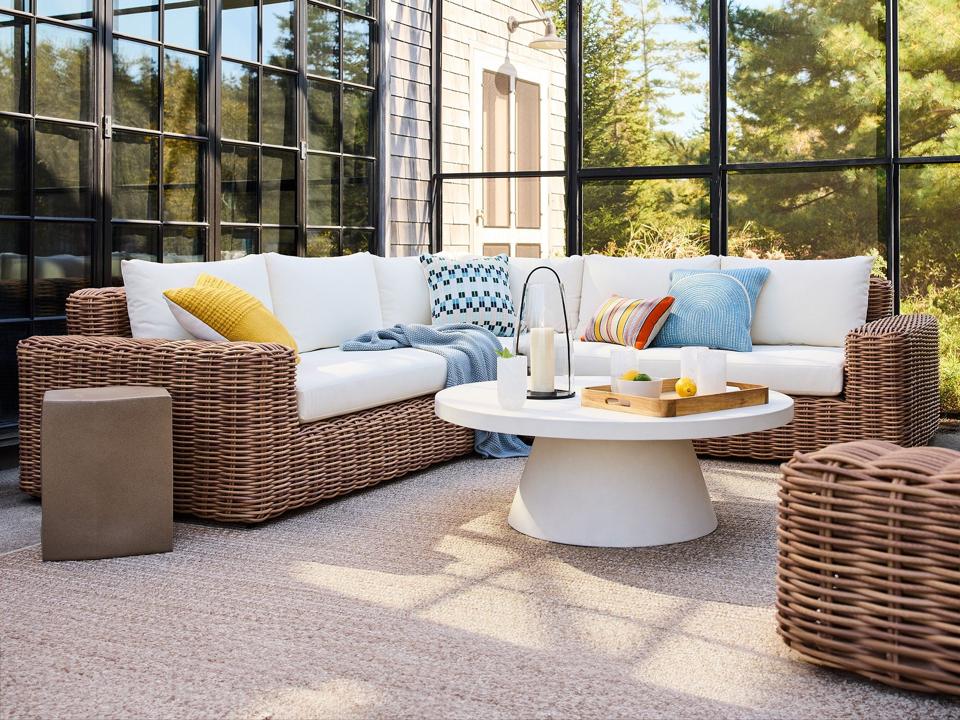
Limitations: Low grade weave can fade or crack. For coastal or commercial use, choose UV stabilised resin on a corrosion resistant frame, or look at resin wicker designs like the settings in the Outdoorly outdoor furniture range.
High quality plastics and composites
Strengths: UV stabilised polypropylene and composite materials are tough, colourfast and easy to clean. They are ideal for busy families, pool zones and high traffic venues that want low maintenance furniture.
Limitations: Very cheap plastics can flex, feel flimsy and go chalky. Look for reinforced construction and reputable manufacturing, especially for heavy use dining and bar sets.
Stainless steel
Strengths: Sleek, strong and suited to modern architecture. The right grade of stainless offers good corrosion resistance and excellent structural longevity for frames and bases.
Limitations: Poor grades can tea stain, especially near the coast. Stainless can also heat up in direct sun, so combine it with timber, composite or cushioned seating surfaces.
Weather resistant fabrics
Strengths: Outdoor specific fabrics are woven and treated to resist UV, moisture, mould and staining. They keep cushions comfortable and presentable even with regular outdoor use.
Limitations: Indoor fabrics in outdoor colours will not survive. For poolside or hospitality, prioritise removable, washable covers and quick drying inserts, and pair them with frames designed for real weather performance, such as the durable settings in guides like the Australian weather outdoor furniture guide.
Sustainability And Eco-Friendly Options For Outdoor Furniture
If you care about your footprint as much as your finish, the good news is that you do not have to trade durability for sustainability. You can have outdoor furniture that survives Australian weather and still sits well with your environmental values.
Sustainably sourced timber
Timber can be a smart choice if it is sourced and finished properly. Look for:
- Verified sustainable forestry with clear, traceable supply
- Durable hardwoods that naturally resist moisture and pests, so they last longer outdoors
- Minimal waste designs that use smart joinery, not excessive metal brackets or plastics
Long lived timber pieces keep carbon locked in the material and out of landfill, as long as you are prepared to do basic cleaning and re oiling when needed.
Recycled and recyclable materials
If low maintenance and low waste are both non negotiable for you, recycled and recyclable frames are worth a close look. Quality outdoor ranges use:
- Recyclable polypropylene and composites that can go back into production at end of life
- Durable resin wicker built on rust free frames that do not unravel or corrode
- Modular designs so you can replace a damaged part, not the whole setting
Many of the commercial grade settings in collections like the Outdoorly outdoor furniture range use long lasting, UV stabilised polypropylene reinforced with fibre glass, which hits that sweet spot of strength, weather resistance and recyclability.
Non toxic finishes and fabrics
Eco conscious buyers often forget that finishes matter just as much as frames. Aim for:
- Low VOC oils and sealers on timber, so you are not sitting on harsh solvents
- Powder coated metal rather than solvent heavy wet paint
- Outdoor specific fabrics that resist mould and stains without constant chemical cleaners
This keeps your space healthier for kids, pets and guests, and it avoids constant re coating with aggressive products just to keep furniture looking decent.
Local and long life thinking
The most sustainable furniture is the setting you do not have to replace every couple of seasons.
Choosing robust materials that suit your exact climate, such as UV stabilised composite settings like the larger outdoor dining collections, cuts transport waste and landfill over time. Local supply also means easier access to spare parts, replacement cushions and after sales support, which keeps pieces in use longer instead of on the kerb.
When you line up sustainably sourced materials, non toxic finishes and true durability, you get outdoor furniture that looks good, lives outside and supports your long term environmental goals, not just this summer’s styling.
Design And Comfort Considerations Aligned With Australian Outdoor Living
Good outdoor furniture in Australia has to do two jobs at once. It has to survive real weather, and it has to feel so comfortable and practical that you actually want to live outside. That is where smart design, ergonomics and layout planning come in.
Match furniture to your type of space
Start by being honest about your layout and how you use it.
- Large gardens and patios: Look for full dining settings with proper chair backs, arm support and enough table space so people are not cramped. Modular lounges that can run along a wall or form a U shape work well for big family gatherings or entertaining, such as sectional styles similar to the flexible pieces you see in larger lounge settings like the Mykonos Lounge Corner Set.
- Balconies and smaller courtyards: Prioritise compact tables, slimline chairs and stackable or foldable pieces. A simple 3 piece setting, such as balcony scale arrangements like the ones in the Monna 3 Piece Balcony Furniture Setting, keeps things usable without crowding the space.
- Commercial outdoor dining: You need consistent sizing, easy circulation for staff and stackable or modular pieces for quick resets between services.
Comfort and ergonomics that work in real heat
Outdoor seating should support you for a full meal or a long drink session, not just look good in photos. Look for:
- Proper back support with a gentle recline, not bolt upright or totally flat
- Seat height that matches table height so knees fit under comfortably
- Armrests on at least some chairs for older guests and longer sits
- Breathable surfaces that do not turn sweaty in humid conditions
- Cushions with firm foam and outdoor fabrics so you sit in them, not on top of a soft blob that collapses
For loungers, look for multiple backrest positions and wide, stable frames so people of different heights can relax without constantly adjusting.
Modularity and easy rearranging
Australian outdoor living is rarely one dimensional. You might host a big lunch one weekend, then want a quiet reading corner the next. Modular and lightweight designs give you that flexibility.
- Clip together lounge modules that can shift from a corner sofa to separate chairs
- Extendable tables that handle everyday family use then pull out for bigger groups
- Stackable chairs and barstools for commercial or event heavy homes
- Pieces with hidden wheels or hand grips so one person can move them without a struggle
When you line up the layout, ergonomics and modularity with how you actually live, your outdoor furniture stops being decorative. It becomes a hard working, comfortable extension of your home or venue that gets used week in, week out, in real Australian conditions.
Maintenance Tips For Longevity Of Outdoor Furniture In Australian Weather
You can buy the best materials on the market, but if you ignore maintenance in Australian conditions, you will still shorten the life of your furniture. The good news is that a simple, consistent routine goes a long way, whether you are looking after a family patio set or a full commercial terrace.
1. Set a simple cleaning routine
For most materials (aluminium, synthetic rattan, high quality plastics, stainless steel):
- Use lukewarm water, a mild detergent and a soft brush or cloth.
- Rinse thoroughly, especially around joints and slats.
- Avoid abrasive pads and harsh chemicals that strip finishes.
For hardwood timber:
- Brush off dust and leaves regularly so they do not trap moisture.
- Wash with a timber safe cleaner, then rinse and let it dry fully.
For outdoor fabrics and cushions:
- Brush off loose dirt before it beds into the fibres.
- Spot clean with mild soap and water, then air dry thoroughly.
- Choose removable covers where possible, like the cushions on many lounge styles such as the Mykonos Lounge Sets XL, so you can wash and dry them properly.
2. Use protective treatments wisely
- Timber works best with a quality outdoor oil or sealer. Re apply when the surface starts to look dry or patchy, not after it has cracked.
- Metals with powder coat usually only need cleaning. For coastal areas, a light application of a corrosion inhibitor around fixings can help.
- Fabrics can benefit from a fabric protector that repels spills, as long as it is rated for outdoor textiles.
Do a quick seasonal check. If water stops beading on timber or fabric, it is time to refresh the treatment.
3. Store and shield during extreme weather
You do not need to baby your furniture, but you should help it out during the worst conditions.
- Use breathable covers that fit properly, not plastic tarps that trap moisture.
- Stack and store lightweight settings, such as resin and polypropylene ranges similar to the Air XL Arm Chair 7 Piece Dining Setting, when you know a storm or long holiday closure is coming.
- In high heat, move cushions into shade or indoors once you are done using them for the day.
- Keep timber and fabric out of constant standing water, for example under leaking gutters or next to pool overflow.
4. Know when to call in a professional
Get professional help when you notice:
- Structural movement, cracks in load bearing joints or wobble in commercial pieces.
- Deep rust on welds or fixings that you cannot clean back easily.
- Mould that returns quickly after normal cleaning, especially on cushions.
For busy venues and larger homes, a scheduled annual service or deep clean keeps settings safe, presentable and compliant, without you chasing problems mid season.
The key is consistency. A few targeted habits, matched to your material type, will easily add years of life to your outdoor furniture in Australian weather.
Conclusion: Making The Right Choice For Weather-Resistant Outdoor Furniture In Australia
Choosing outdoor furniture in Australia is not just about picking a nice looking setting. You are choosing materials that have to live with harsh UV, sudden rain, humidity, coastal air and real daily use from family, guests or customers.
You have seen how the key materials stack up. Hardwoods bring warmth and a premium feel, as long as you are ready for some care. Powder coated aluminium and stainless steel offer strength and clean lines, with good corrosion resistance when you choose the right grade and finish. Synthetic rattan, high quality plastics and composites give you low maintenance durability with plenty of style options, especially in larger dining sets such as the flexible layouts you get with a 10 seater outdoor dining setting. Weather resistant fabrics tie it all together so seats stay comfortable and presentable outside.
On top of that sits sustainability, which matters more every year. You can back sustainably sourced timber, recyclable frames, non toxic finishes and longer life construction. When you buy once and buy well, you reduce waste and avoid the cycle of cheap settings that end up on the kerb after a short stint outdoors.
Design and comfort are where the right materials turn into a space you actually use. Match your furniture to how you live. Big families or entertainers might lean toward generous modular lounges and extendable dining, similar in spirit to larger modular options such as the Mykonos lounge sets. Smaller balconies call for compact, stackable pieces. Hospitality venues need stackable, commercial grade seating that still feels inviting for guests.
Then there is maintenance. A simple routine of cleaning, the right protective treatments and smart storage during extreme weather will easily add years to any setting, whether it is timber, metal, resin or a mix.
The smartest way forward is to line up four things, your climate, your lifestyle, your environmental values and your appetite for maintenance. When those are clear, you can choose materials and designs that tick every box, so your outdoor furniture looks good, feels comfortable and keeps performing in real Australian weather for the long haul.
